
Are you concerned about the refrigerant level in your AC unit? Let Knight’s Quality Air diagnose the issue and restore your unit to proper functionality when you call (463) 218-6651.
If you’ve never checked refrigerant levels before, you’re probably wondering, “How do I check the refrigerant in my AC unit?”
As Indianapolis’s highly rated AC repair company, the Knight’s Quality Air Crew delves deeper into the importance of maintaining proper refrigerant levels, how to identify low levels, and ways to check and maintain refrigerant levels for optimal system performance.
What Is Refrigerant?
Refrigerant, as the name implies, is a substance that aids in the transfer of heat from one area to provide cooler air. Air conditioners store the refrigerant inside copper coils.
When warm air enters the system from outside, the refrigerant absorbs the heat and transitions to a liquid state. Once the warm air passes over the coils to the outside space, the refrigerant cools and turns into a gas.
The fan then circulates warm air over the cooled coils, producing cool indoor air. This continuous cycle maintains a cool, comfortable temperature.
Symptoms of Low Refrigerant Levels
Proper refrigerant levels matter for various reasons. First, an inefficient AC unit will struggle to cool your home effectively. Consequently, you may end up paying more than necessary on your utility bills and risk damaging your unit over time by pushing it too hard without proper care.
If not caught early enough, improper refrigerant levels can also lead to costly repairs or irreparable system damage. Stay alert to the following signs that your AC unit’s refrigerant may be running low:
- Warm air blowing from the vents
- Hissing or bubbling noises coming from the AC unit
- Ice buildup on the evaporator coil or refrigerant lines
- A significant increase in energy bills without other changes
Steps to Check Refrigerant Levels
How do I check the refrigerant in my AC unit? The following steps outline how to check your AC unit’s refrigerant or Freon Level:
1. Determine the Type of Refrigerant
Modern types of air conditioning systems use different types of refrigerants. Your unit should list the type of gas, the number of circuits, and the number of plates, among other details.
2. Check the Refrigerant Pressure
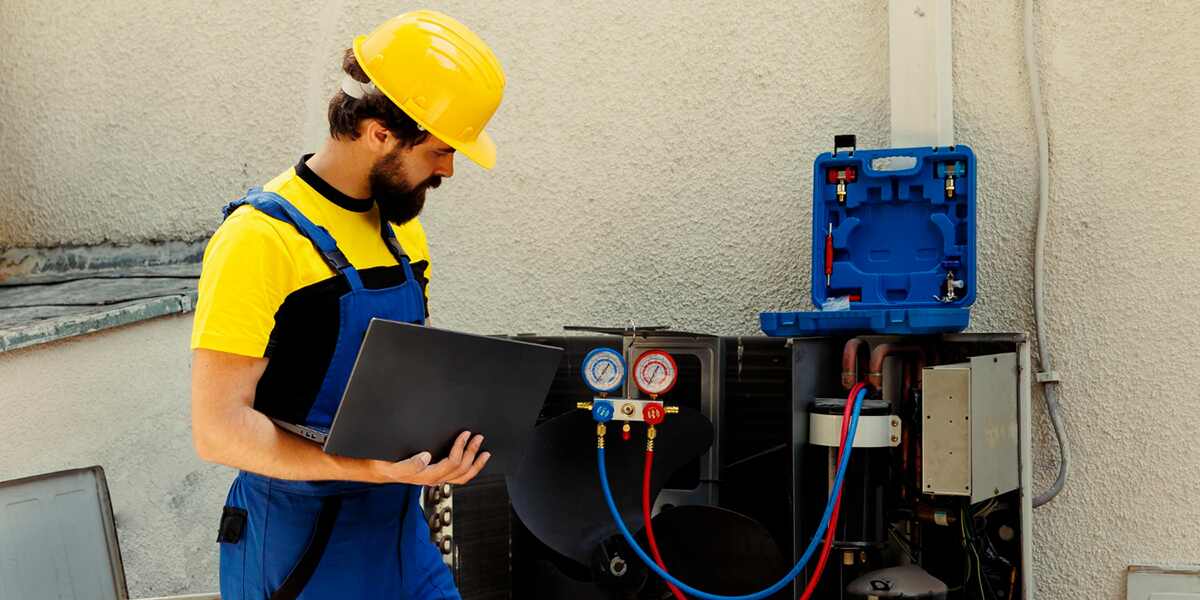
Most AC units have pressure gauges that indicate discharge and suction pressure as well as high and low pressure. For systems without an in-fitted gauge, check the pressure details in the documentation.
3. Take Evaporation and Condensation Readings
Determine the condensation and evaporation temperature using a refrigerant slider. Set the slider to “dew” for evaporation temperatures and set it to “bubble” for condensation readings. Remember to write down this information.
4. Measure the Refrigerant Temperature Readings
To measure refrigerant levels, calculate the temperature difference between subcooling and subheating. The subcooling temperature should be at about 5 Kelvin, while the superheating temperature should be at about 10 Kelvin.
You’ll need a digital thermometer, a refrigerant slider, and a way to track results. Measure the subcooling temperature before the expansion valve and the superheating temperature on the suction pipe.
5. Calculate the Refrigerant Level
Once you have all the data, subtract the evaporation temperature from the suction pipe temperature to get the superheating. Then, subtract the discharge pipe temperature from the condensation temperature to get the subcooling.
If the results fall within the 10K and 5K range, then your AC unit is operating under the right refrigerant level. Otherwise, call a technician to check it out. Note that only a certified technician should empty and fill the refrigerant.
Maintaining Proper Refrigerant Levels
Keeping your AC refrigerant at optimal levels will ensure your cooling system works efficiently and improve your indoor air quality. The following tips will help you achieve this:
- Schedule regular AC maintenance
- Monitor your cooling system’s performance regularly
- Inspect refrigerant lines for leaks
- Use the right type of refrigerant for your air conditioning system
- Hire an expert to address refrigerant leaks promptly
Call Knight’s Quality Air Today for Expert HVAC Services
Now that you can answer the question, “How do I check the refrigerant in my AC unit?” You don’t want just anyone handling your cooling system needs.
Knight’s Quality Air, your trusted partner for exceptional HVAC solutions, boasts over a decade of experience delivering top-tier HVAC solutions throughout Central Indiana. Trust our competent crew for quality products and services, unparalleled expertise, and personalized solutions.
AC leaking water? Reach out to find out the reasons your AC is leaking water.
Call Knight’s Quality Air at (463) 218-6651 to request a free estimate for HVAC services in Indianapolis, Indiana, or nearby.