
Are you sick of those unsightly white spots marring your freshly washed dishes? Does your hair feel dry and unclean even after a shower? You could be a good candidate for water softener installation.
How do water softeners work? Discover the answer below, then call Kight’s Quality Air to schedule plumbing services in Lawrence, IN.
What Does a Water Softener Do for Your Lawrence, IN, Home?
A water softener is a must for homes with hard water. The term “hard water” depicts water rich in minerals, such as calcium and magnesium. While our bodies need these minerals to thrive, they do no favors for your plumbing system.
Over time, mineral deposits can build up in your pipes, causing clogs and low water pressure. You might also see white spots on your dishes or struggle to get your laundry fully clean. Your water heater efficiency can suffer as well.
Water softeners resolve the issue by removing minerals from water using a process called ion exchange. We’ll explain this process in more detail below.
How Do Water Softeners Work?
To explain how water softeners work, we’ll first discuss the most important parts of a water softener. They include:
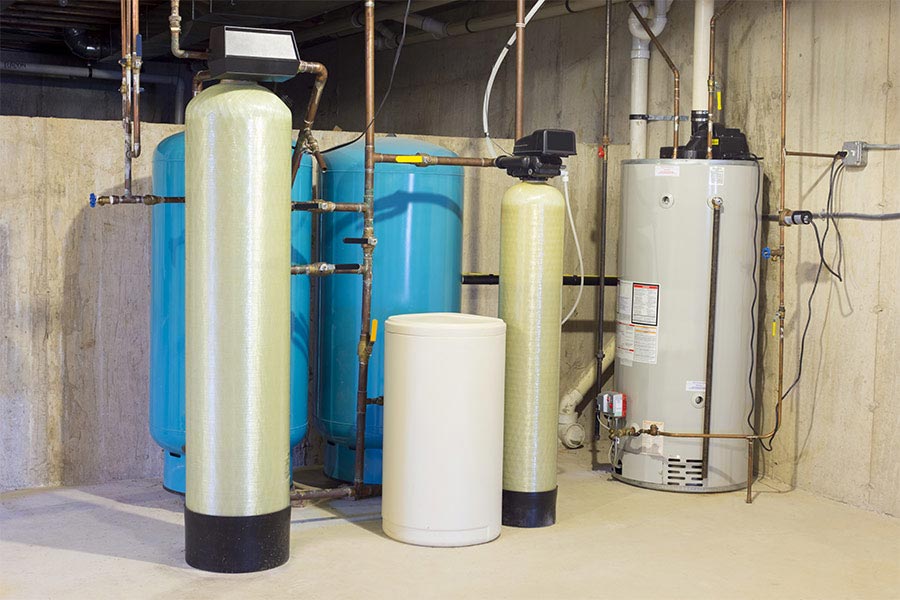
- Mineral tank: The mineral tank is the place where all the water-softening magic happens. Water flows into the tank through the supply line and passes through a resin bead bed. The resin beads capture and remove magnesium and calcium buildup, and the softened water passes through into your home’s pipes.
- Brine tank: The brine tank sits next to the mineral tank. As the name implies, it holds a concentrated solution of saltwater, which the system uses to restore the positive charge of the resin beads. When the system detects that the beads are losing their charge, it’ll flush the tank with the saltwater solution.
- Control valve: The control valve features a meter that measures the volume of water moving through the tank. It automatically starts ion charge regeneration at set times based on your water’s hardness level, the size of your Lawrence home, and how many people live there. The regeneration process usually takes about two hours. The system will tell you when it’s regenerating, and it’s best not to use it at this time.
How do water softeners work? Water softeners employ one of two regeneration methods: co-current or counter-current regeneration. Here’s how they differ:
- With co-current regeneration, saltwater passes into the mineral tank in the same direction as the flow of service. The saltwater washes over the beads, replacing calcium and magnesium ions with sodium. After the process is complete, beads with the highest ion charge will float to the top of the tank.
- With counter-current regeneration, the saltwater solution enters at the bottom of the tank. The saltwater flows through the resin bed from the bottom up. Counter-current regeneration is preferable to co-current regeneration because it distributes sodium ions more evenly. Additionally, it uses 65% less water and 75% less salt for water conditioning and magnesium removal.
Is It Safe to Drink Softened Water?
You may worry about the safety of drinking softened water because the softening process introduces salt. However, water softeners add much less salt than you might think. For example, the average softener only adds about five grams of sodium per gallon of water, which is less than 2% of the recommended daily sodium intake.
That said, you may have some cause for concern if you live in a house with very hard water (over 400 ppm). In this case, we might suggest pairing your softener with a reverse-osmosis system.
Perks of Water Softener Installation
Why install a water softener? Is hard water really that big of a deal? Yes! It can wreak havoc on your pipes, dishes, laundry, and hair. When you install a water softener, you’ll enjoy perks like these:
- Softer, smoother skin and hair. Plus, soft water is easy to lather and uses much less soap to do so.
- Softer, brighter, and whiter clothing. No more shirts that stay dingy even after laundering them multiple times.
- Fewer unsightly white spots on your dishes. Your plates and glassware will come out of the dishwasher sparkling every time.
- Improved water heater efficiency. By removing minerals from your water, the system won’t have to work as hard, which means lower energy bills and a longer lifespan.
How Do Water Softeners Work? Contact Our Team in Lawrence, IN, to Learn More
Want a more in-depth answer to the question, “How do water softeners work?” Reach out to Kight’s Quality Air. Areas we serve include Lawrence, Indianapolis, Plainfield, and nearby cities. Contact us to schedule service today.