
When a boiler stops producing heat in the middle of an Indianapolis winter, the urgency is immediate. Temperatures in this region regularly drop into the single digits between December and February, and a home without heat can become uncomfortable within hours. In our service calls throughout Indianapolis, boiler issues follow recognizable patterns, and knowing what to look for before calling a technician helps homeowners communicate the problem clearly and get the right help faster. This guide covers the most common causes, how to read the warning signs, and when professional service is the necessary next step.
Common Boiler Problems in Indianapolis, IN Homes
Boilers are generally reliable systems, but they develop recognizable issues over time, particularly in homes where routine maintenance has been deferred. Based on what we see in Indianapolis properties, these are the problems that come up most consistently:
- Strange noises: Banging, gurgling, or kettling sounds from the boiler or pipes often indicate air trapped in the system, sediment buildup on the heat exchanger, or pump issues. These sounds should not be ignored, as they typically worsen over time.
- Low pressure: The pressure gauge on a boiler should read within the manufacturer’s recommended range, typically between 1 and 1.5 bar when cold. Pressure that falls below the normal range reduces heating efficiency and can prevent the system from operating altogether.
- Visible leaks: Water pooling around the boiler, at pipe joints, or near the pressure relief valve points to a seal, valve, or corrosion issue that requires prompt professional attention.
- Uneven heating: If some radiators or zones in the home are warm while others stay cold, the issue may be air in the system, a failing pump, or a zone valve that is not opening correctly.
- Yellow or orange flame: A gas-fired boiler should produce a crisp blue flame. A yellow or orange flame indicates incomplete combustion, which can produce carbon monoxide and is a safety concern that warrants an immediate service call.
Investing in professional boiler repair at the first sign of these issues is almost always less costly than allowing them to develop further.
How to Identify the Source of Your Heating Issues
Pinpointing the source of a heating problem starts with a systematic look at the system’s observable conditions. A technician will conduct a thorough diagnostic, but homeowners can gather useful information in advance by checking a few key indicators.
Start with the thermostat. Confirm it is set above the current room temperature, that it is powered and functioning, and that it is communicating with the boiler. A thermostat issue can mimic a boiler failure and is worth ruling out before assuming the boiler itself is the problem.
From there, check the pressure gauge. A reading that has dropped significantly since your last check can indicate a slow leak or a system that needs repressurization. Check the area around the boiler and along accessible pipe runs for any signs of moisture.
Listen to the radiators throughout the home. Cold spots at the top of a radiator with warmth at the bottom typically indicate trapped air that needs to be released. Cold radiators throughout the house, despite the boiler running, point to a circulation or zone-control issue.
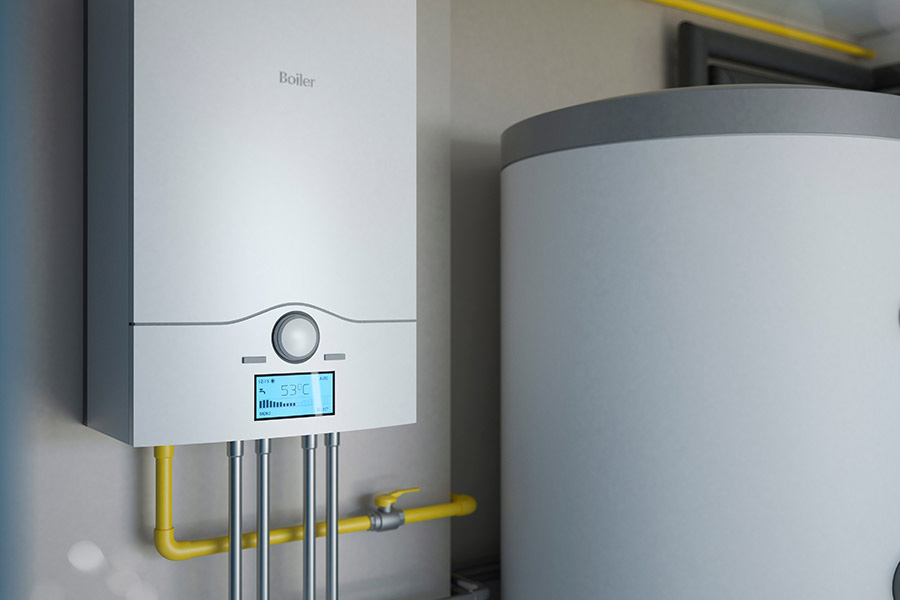
If the boiler is not firing at all, check whether the pilot light is lit on older systems, or whether the ignition sequence is completing on modern units. A boiler that attempts to fire but shuts down quickly may be experiencing a lockout condition, which is often displayed as an error code on the control panel.
For older systems that have reached the end of their service life, the conversation may shift toward boiler installation and replacement rather than repair. A technician can help evaluate whether the cost of continued repairs justifies keeping the existing unit in service.
Step-by-Step Troubleshooting for Boiler Malfunctions
When a boiler is not heating the home correctly, working through a logical sequence of checks helps narrow down the cause before a technician arrives. Here is the approach our team recommends for homeowners:
- Check thermostat settings: Confirm the thermostat is calling for heat, is set above the current room temperature, and has functioning batteries or power.
- Inspect the power supply: Verify the boiler is receiving power, the circuit breaker has not tripped, and any isolator switches near the unit are in the on position.
- Check the pressure gauge: If the system pressure is below the recommended range, the boiler may need to be repressurized. This is a task a technician can walk you through or handle on a service call.
- Look for error codes: Modern boilers display fault codes on a digital panel when they enter lockout mode. Note the code and share it when you call for service, as it significantly speeds up the diagnostic process.
- Inspect for leaks: Look around the boiler cabinet, pipe connections, and the area below the pressure relief valve for any signs of water.
- Check the pilot light or ignition: On older units, confirm the pilot light is lit. On modern systems, listen for the ignition sequence when the thermostat calls for heat.
If working through these steps does not resolve the issue or identify a clear cause, the problem requires professional diagnosis. Attempting repairs beyond these basic checks without the proper training and tools carries real risk with gas-fired equipment.
When to Call a Professional for Boiler Repairs
Some boiler issues require immediate professional service without any troubleshooting. These include:
- Any smell of gas near the boiler or elsewhere in the home. Leave the house, avoid operating any switches or electrical devices, and call your gas provider and an HVAC professional from outside the house.
- A yellow or orange flame visible through the boiler’s inspection window, which indicates a carbon monoxide risk.
- Water is actively leaking from the boiler or pipes, particularly near electrical components.
- A boiler that repeatedly locks out and resets without sustaining normal operation.
Beyond urgent situations, scheduling professional service promptly when a boiler is underperforming, making unusual sounds, or showing changes in efficiency is the right approach. Trusting a qualified technician not only resolves the immediate issue but also protects the system from the secondary damage that often follows when an underlying problem goes unaddressed.
Preventive Maintenance Tips to Avoid Future Boiler Issues
The most reliable way to avoid a heating emergency is consistent, professional preventive maintenance. Here is what that looks like in practice:
- Annual professional inspection: A qualified technician should inspect the boiler once per year, ideally before the heating season begins. This covers heat exchanger condition, burner performance, controls, seals, and the venting system.
- Pressure monitoring: Homeowners should periodically check the pressure gauge during the heating season and note any significant changes that develop between service visits.
- Radiator bleeding: If radiators develop cold spots at the top, they may need bleeding to release trapped air. This is a straightforward task that improves the efficiency of circulation throughout the system.
- Keep the area around the boiler clear: Clutter near the unit restricts airflow, creates a fire hazard, and makes routine inspection and service more difficult.
- Note and report changes: Unusual sounds, odors, or performance changes that develop between service visits should be reported to a technician promptly rather than monitored and ignored.
A maintenance plan that includes routine check-ups and priority scheduling for service calls is the most cost-effective approach to long-term boiler reliability.
Kight’s Warming Up to Every Indianapolis, IN Winter
A functioning boiler is not optional when Indianapolis temperatures drop, and addressing problems early is always less disruptive and less expensive than waiting for a full failure. Kight’s Quality Air Conditioning & Heating Repair has the experience and honest approach that Indianapolis homeowners need when their heating systems are not performing as they should. Homes with hydronic heat need a different approach. Learn about our boiler installation and replacement services. Contact our team today to schedule a boiler inspection or service call and head into the cold months with confidence.
If these steps don’t restore your heat, our team provides boiler repair in Indianapolis, IN, and can diagnose the problem fast.